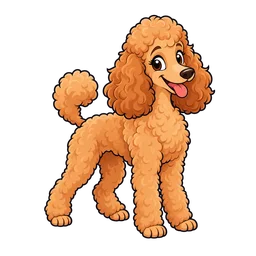
Poodle gigante macho ou fêmea: existem diferenças de comportamento?
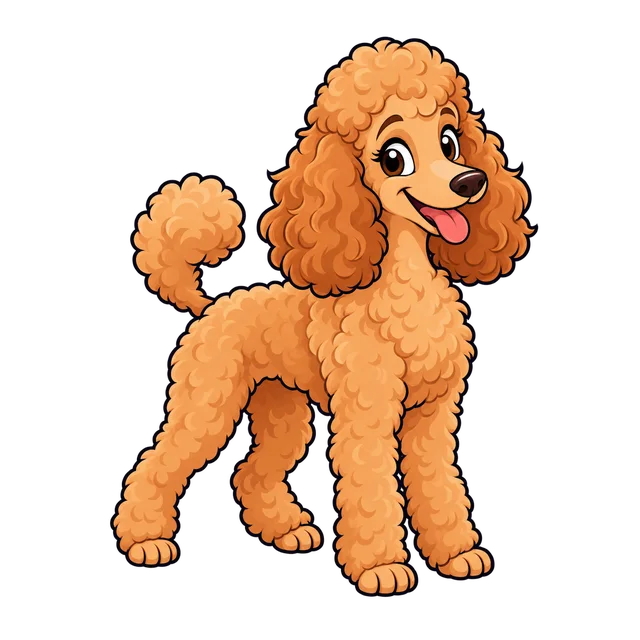
Imagine standing in a spacious kitchen while a thirty-kilogram bundle of curly white fur attempts to rest its chin on the kitchen counter, entirely convinced that it belongs right there next to the fruit bowl. That is the initial reality of sharing a home with a Standard Poodle. When people reach the point of deciding whether to bring home a male or a female puppy of this magnificent breed, a torrent of opinions usually follows. Friends, breeders, and internet forums are full of absolute certainties. One side claims machos are fiercely loyal protectors, while the other insists fêmeas are calmer and easier to reason with.
The short answer is that biological sex plays a secondary role compared to individual temperament, socialisation, and daily handling. While minor physiological and hormonal differences exist, they do not dictate whether a specific dog will be affectionate, obedient, or anxious. Choosing between a male and a female Poodle gigante requires looking past old clichés and focusing on what actually shapes canine behavior in a domestic environment.
O peso dos mitos sobre machos e fêmeas
People love to categorize animals by gender because it simplifies complex decisions. Someone hears that males are more dominant or that females are more independent, and they lock that idea into their minds as a biological law. In practice, a Poodle gigante possesses a sharp intellect and high emotional sensitivity regardless of its sex. Both males and females can be intensely attached to their families, eager to solve puzzle toys, and prone to testing boundaries during adolescence.
Hormones do influence behavior, of course. Intact males might show more interest in marking territory outdoors, while intact females experience hormonal cycles that can alter their energy levels and mood temporarily. However, veterinary guidance regarding neutering and spaying changes these equations significantly, and even before any procedure, individual personality swamps biological sex tendencies. A shy male is still shy, and an outgoing female remains outgoing. Treating sex as a behavioral destiny often leads to misplaced expectations.
Consider the assumption that females are naturally more cautious or gentle. Anyone who has lived with a confident female Poodle knows she can be just as boisterous, stubborn, and fearless as any male counterpart. Conversely, males are often painted as aggressive or hyperactive guard dogs, ignoring the reality that these dogs are famous for their sensitivity and desire to please. When you look at individual dogs rather than gender stereotypes, the behavioral overlap is massive.
O cotidiano prático e a dinâmica de convivência
Picture a rainy afternoon where a large dog needs mental stimulation instead of a long walk in the park. A Poodle gigante, male or female, will find a way to make its presence felt. Some owners imagine that males require a heavier hand or firmer discipline because of their physical stature, while females are treated as delicate creatures due to a perceived emotional fragility. This division falls apart quickly when the dog in question decides to sprint across the living room rug at full speed after a stray rubber ball.
Physical size is comparable between well-bred males and females of the breed, though males generally end up slightly taller and heavier. This difference matters more for physical handling than for behavioral traits. Walking a strong dog requires proper leash training and physical management, tasks that apply equally to both sexes. If a dog pulls on the leash, the root cause is lack of training or high arousal, not the chromosome count. Assuming that one sex is naturally easier to walk or train ignores the core of canine learning theory.
Daily life is shaped far more by household routines than by chromosomes. A dog that receives clear communication, consistent boundaries, and plenty of mental engagement will thrive regardless of its sex. Problems arise when owners project human social rules onto dogs, expecting males to act like protective guardians and females like nurturing companions. Dogs operate on immediate feedback, reinforcement, and emotional security, meaning that your own behavior as a tutor dictates how smooth daily life becomes.
Personalidade, sensibilidade e fases de desenvolvimento
A puppy grows into an adolescent dog through various behavioral shifts, testing rules and reacting to the surrounding environment with changing levels of confidence. During these stages, both males and females exhibit periods of stubbornness and bursts of intense curiosity. Poodles are famously intelligent, which is both a blessing and a complication. They notice subtle shifts in human body language, vocal tone, and daily scheduling.
A nervous owner can easily create an anxious dog, regardless of whether that dog is male or female. When behavioral issues appear, such as excessive barking or fearfulness toward strangers, looking for a single root cause or a magic training trick rarely works. Changes in behavior can stem from medical discomfort, environmental stress, or inconsistent routines, and persistent or sudden shifts deserve an evaluation from a qualified veterinarian.
Learning happens continuously throughout a dog's life rather than in a brief, closed window during puppyhood. Both males and females remain adaptable and eager to learn new skills as adults, provided their education is approached with patience and positive reinforcement. Treating a dog as a permanent work in progress prevents the frustration that happens when owners expect instant perfection after a few obedience classes.
Tomando a decisão prática sem cair em armadilhas
How should you choose between a male and a female puppy? Instead of choosing based on gender myths, look at the specific puppy's reactions in different situations. How does the animal respond to gentle handling, new sounds, or human interaction? Breeders or shelters often notice individual traits long before gender matters. A calm, curious male might fit a lively household better than an overly sensitive female, or vice versa.
Avoid treating any training method as an infallible guarantee against fear or disobedience. Dogs are living individuals influenced by genetics, early experiences, and ongoing daily management. Gradual adaptation is always necessary when introducing a new pet to a home. If challenges arise, seeking professional guidance ensures that the approach matches the dog's actual needs rather than a rigid rulebook based on sex.
Choosing between a male and a female Poodle gigante comes down to meeting the individual dog where it is, providing consistent guidance, and accepting that personality unfolds over time. The right companion is the one whose temperament matches your household rhythm, not the one that fits a gender stereotype.